
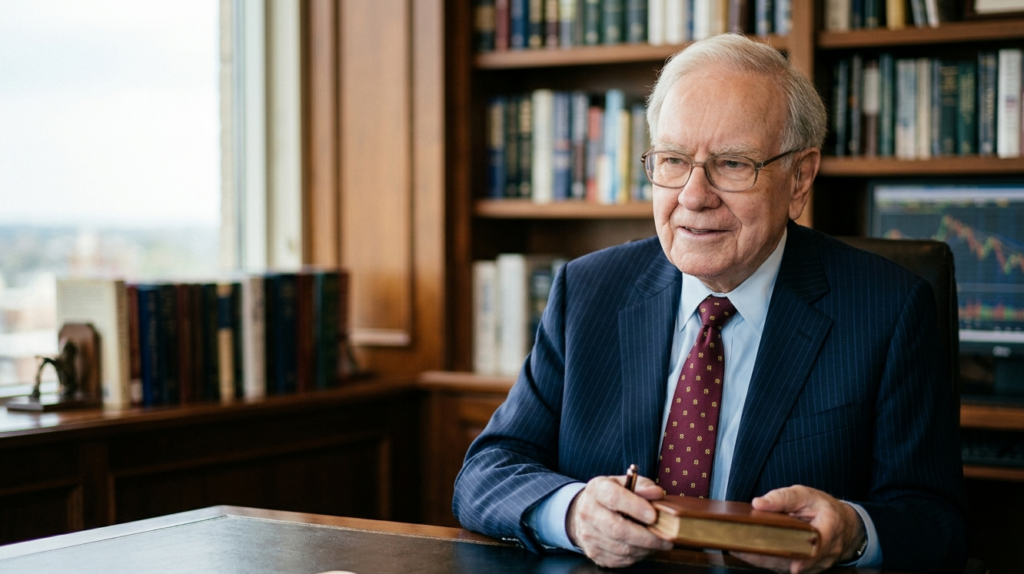
Warren Buffett – The Compounding Alchemist of Omaha
Warren Buffett is more than an investor; he is the architect of the most successful compounding machine in history. From a humble paperboy in Omaha to the helm of Berkshire Hathaway, his career is a masterclass in the psychology of patience, the power of the “moat,” and the relentless pursuit of long-term value.
www.investing.com
The Genesis of a Billionaire: The Snowball Effect
Buffett’s story does not begin in a high-rise office but on a bicycle delivering newspapers, a job that taught him the value of grit and early responsibility. At age 11, he purchased his first shares of Cities Service Preferred—a moment that sparked a lifelong obsession with the mechanics of wealth creation.
The term “Snowball Effect” is the perfect metaphor for Buffett’s life. Compounding is a slow process that requires extreme patience in the early stages, where progress seems invisible. Buffett famously became a billionaire at age 56, and a staggering 99% of his wealth was generated after his 50th birthday. This serves as a vital lesson: enduring, profitable wealth is not built in a “get-rich-quick” cycle; it is built through decades of discipline and reinvestment.
The Evolution of Strategy: From “Cigar-Butt” to Quality
Buffett’s philosophy is often described as “Value Investing 2.0.” Initially, he followed the teachings of his mentor, Benjamin Graham, who sought out “cigar-butt” stocks—companies trading for less than their liquidation value that were essentially “dying” but offered one last “puff” of profit.
www.investing.com
However, influenced heavily by his partner Charlie Munger, Buffett shifted his focus. He realized that buying a “fair” business at a “wonderful” price was inferior to buying a “wonderful” business at a “fair” price. This transition marked his move away from simply finding cheap assets toward acquiring economic fortresses.
www.investing.com
The Pillars of Buffett’s Investing Rules
To understand Buffett’s success, one must understand his core rules:
- Rule 1: Never Lose Money. This is not a guarantee against market volatility but a mindset of capital preservation. Avoiding unnecessary, high-stakes risks is paramount. www.investing.com
- Rule 2: Never Forget Rule 1. This reinforces that avoiding disaster is more important than achieving “home run” returns in the short term. www.investing.com
- Buy Quality Businesses: He views stocks as partial ownership in real businesses, not just “squiggly lines on a chart”. www.mesirow.com
- Management Matters: He invests in companies where the leadership is competent, honest, and predictable. www.investing.com
- The Margin of Safety: He never overpays. By waiting for a price that offers a buffer against errors, he protects his investments from market irrationality. www.cmcmarkets.com
- Think Long Term: His favorite holding period is “forever.” He refuses to resell holdings simply because they have appreciated or because of short-term market trends. www.mesirow.com
The “Moat” Philosophy: Creating Economic Fortresses
A “moat” is a lasting competitive advantage that prevents rivals from stealing market share. When Buffett looks at a business, he asks: “What keeps the competitors out?”
www.mesirow.com
- Brand Power: Coca-Cola is the classic example. The moat isn’t just the formula; it is the global distribution network and the brand equity that ensures consumers choose it over a generic alternative. www.mesirow.com
- Predictable Earnings: Buffett favors businesses with durable economics—companies that provide essential goods or services that people will need regardless of the economic climate. www.investing.com
- High Barriers to Entry: He looks for businesses that are incredibly difficult to replicate, whether due to scale, regulatory advantages, or specialized infrastructure. www.investing.com
The Apple Transformation: A Pivot in Perspective
For decades, Buffett avoided technology, famously stating, “Technology is not something we understand”. However, his 2016 pivot into Apple remains one of his most brilliant moves.
Buffett eventually realized that Apple was not a traditional “tech” company subject to the rapid obsolescence of silicon chips. Instead, it was a consumer staple with the “stickiest” ecosystem in history. By focusing on the strength of the brand and the recurring nature of the service revenue, Buffett viewed Apple through the same lens he used for insurance or retail companies—as an essential, defensible asset. This investment has since generated over $100 billion in value for Berkshire Hathaway, proving that even a legendary investor can evolve his mental model when the facts change.
The “Most Gruesome” Mistake: Dexter Shoe Co.
Even the “Oracle of Omaha” is not infallible. Buffett has frequently cited the 1993 acquisition of Dexter Shoe Co. as his “worst deal”. He paid $433 million for the Maine-based manufacturer, using Berkshire Hathaway stock as the currency.
At the time, Dexter appeared to be a “business jewel” with strong management and consistent profits. However, the company lacked a true moat. When foreign competition began flooding the market with lower-cost alternatives, Dexter’s competitive advantage evaporated, and the business eventually became worthless.
The true cost, however, was in the method of payment. By using Berkshire stock—which ballooned in value over the following years—Buffett essentially paid a price that would be worth billions today. The lesson from Dexter is a permanent fixture in Buffett’s philosophy: always prioritize durable competitive advantage, and be acutely aware of what you are trading away in an acquisition.
Conclusion: The Oracle’s Legacy
Buffett’s success is built on the refusal to play the “market game” and a commitment to his own set of rules. He stays within his “circle of competence,” waiting patiently for the right opportunity, and never allows the fear or greed of others to dictate his actions.
www.mesirow.com
Whether he is holding record levels of cash to wait for a crash or investing billions into an AI infrastructure pivot, Buffett remains focused on the “business of business”. His life proves that while the market is a device for transferring money from the impatient to the patient, the ultimate secret to wealth is the quiet, consistent application of fundamental principles over a lifetime.
- The Lesson: Never use your “gold” (winning stock) to buy “lead” (a struggling business).